INSIDESTORIED
AUG 20, 2026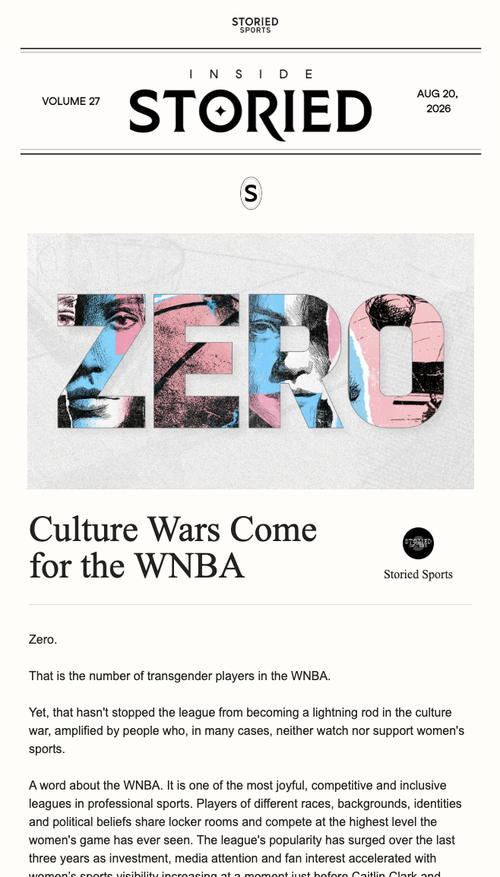
Culture Wars Come for the WNBA

Zero.That is the number of transgender players in the WNBA.Yet, that hasn't stopped the league from becoming a lightning rod in the culture war, amplified by people who, in many cases, neither watch nor support women's…
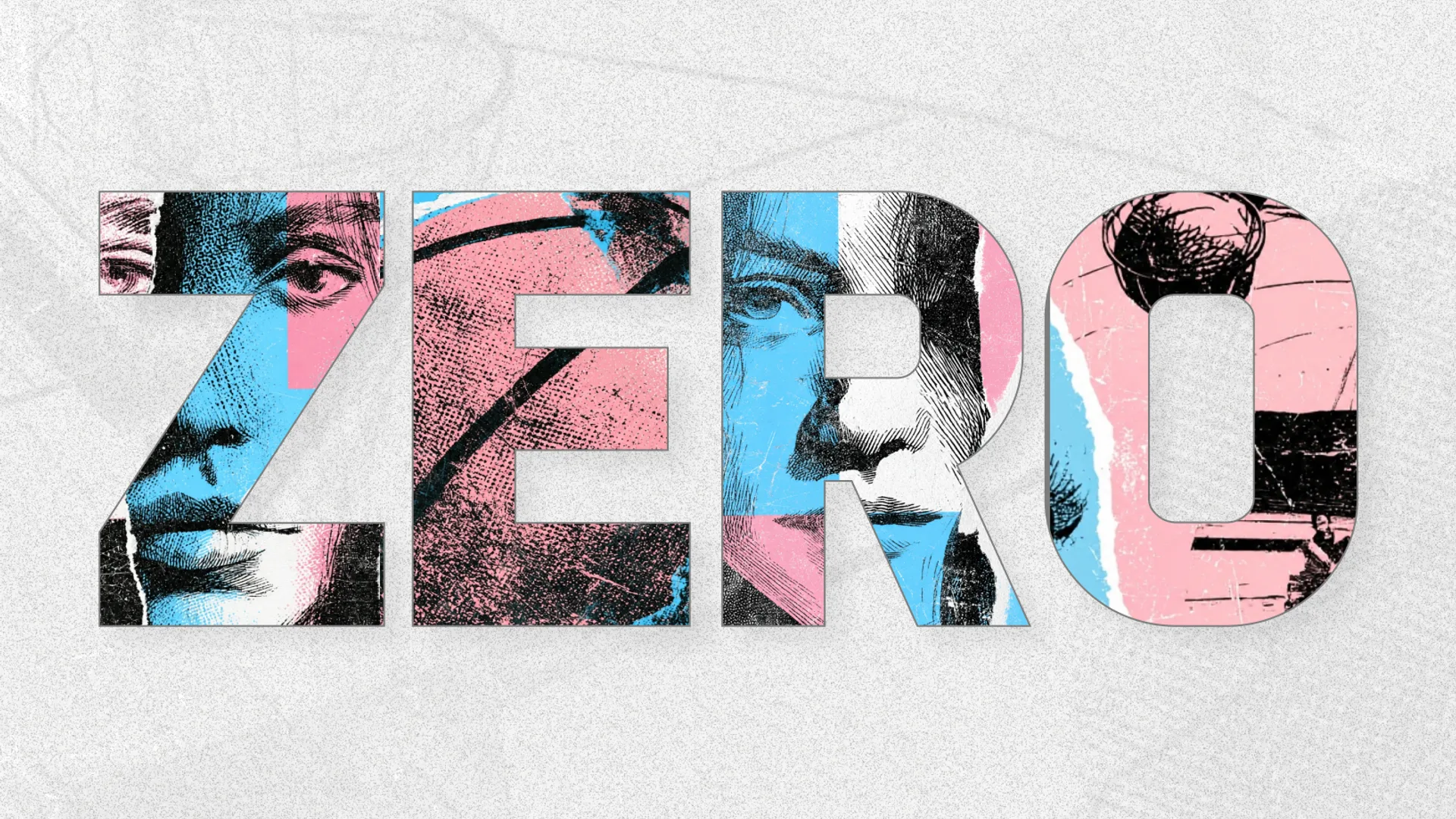
Zero.
That is the number of transgender players in the WNBA.
Yet, that hasn't stopped the league from becoming a lightning rod in the culture war, amplified by people who, in many cases, neither watch nor support women's sports.
A word about the WNBA. It is one of the most joyful, competitive and inclusive leagues in professional sports. Players of different races, backgrounds, identities and political beliefs share locker rooms and compete at the highest level the women's game has ever seen. The league's popularity has surged over the last three years as investment, media attention and fan interest accelerated with women’s sports visibility increasing at a moment just before Caitlin Clark and Angel Reese were iron-sharpening-iron in the NCAA.
Sophie Cunningham, Clark's teammate, made comments about transgender athletes that opened the castle gates to activists looking for a new front in the culture war. What followed had very little to do with the actual WNBA and everything to do with using the league as a vehicle for broader political arguments.
The result has been a conversation that distracts from a league setting records for attendance, television viewership and cultural relevance. For some of those amplifying the outrage, perhaps that's the point.
WNBA leadership should publicly back the players and fans who are actually part of this league. Black women, white women, queer women and anyone wearing a WNBA jersey are increasingly facing harassment simply because of their association with a league that has embraced inclusion. It’s time for great leadership here.
Inclusivity that the WNBA has long fought for is now being weaponized against the league itself. Yes, a league can be welcoming to everyone while refusing to tolerate racism, misogyny, homophobia or harassment. Former NBA players Enes Kanter Freedom and Royce White publicly mocked the league by claiming they identified as women and should therefore be allowed to play. The stunt demeans both transgender people and women's sports.
Meanwhile, legislation introduced around the country has consequences that extend far beyond the tiny number of transgender athletes it purports to regulate. Policies have emerged that invite accusations against girls' eligibility, require invasive scrutiny of their bodies or subject them to investigations simply because someone believes they don't look feminine enough. In some places, proposals have gone so far that girls could be subjected to medical examinations simply to participate in school sports.
That is a remarkable price to pay in pursuit of a problem that barely exists. And it is certainly one way to discourage girls from participating in the very activities that build confidence, leadership and lifelong community.
Reasonable people can disagree about where competitive categories should be drawn in elite sport. Different sports already use different frameworks. Boxing has weight classes. Paralympic sport uses classification systems. Age-group competition exists throughout youth athletics. Elite governing bodies can and should continue having thoughtful conversations about competitive fairness. Individual Olympic sports and youth soccer require different considerations, and there are plenty of teams where everyone can play and compete together.
At Storied Sports, we believe sports are one of society's greatest engines for belonging. We grew up on fields, courts and playgrounds with teammates of every background. We believe everyone should have the opportunity to experience the confidence, friendships and leadership that sports foster. We also believe questions about competition deserve thoughtful, evidence-based discussion rather than mockery or political opportunism.
Public figures bear responsibility for the conversations they help unleash. The least the rest of us can do is stand behind the people who have spent decades actually building the WNBA: coaches who stand up for their beliefs and speak out against hate, the players who continue to support each other despite the backlash, and the fans who simply want the game to keep growing and inspiring the next generation.
Women to know
Hailey Morgan · Guard, Pacific Dynamos · 12-year veteran
Coach Victoria Park · Head Coach, Southeast Pride
Sophia Mendez · Forward, Central Valley FC · League MVP candidate
Dr. Elena Rodriguez · Sports Analyst and Lead Commentator, Sports Network
Thank you for being part of this journey with us. We're just getting started.
The Storied editors