INSIDESTORIED
SEP 17, 2026
The Right Stuff

The search for the WNBA's next commissioner is underway, and the names are coming quickly.Before debating who should get the job, it's worth asking a more important question:What is the job?The WNBA has always occupied…
The search for the WNBA's next commissioner is underway, and the names are coming quickly.
Before debating who should get the job, it's worth asking a more important question:
What is the job?
The WNBA has always occupied a unique place within the NBA. Cathy Engelbert was the league's first commissioner; every woman before her carried the title of president. The commissioner title suggested greater independence but did it come with greater authority?
From the outside, it’s often felt as though the league's biggest decisions required multiple layers of approval.
If the commissioner's role remains simply managing the league until something requires Adam Silver's attention, no candidate will truly succeed.
What the WNBA needs going forward is a leader with credibility—among players, owners, sponsors, fans, and staff—and the authority to act on that credibility. Engelbert deserves credit for overseeing a period of extraordinary growth. Since 2020, the league has experienced record attendance, television audiences, franchise valuations, expansion, and sponsorship revenue. Yet growth alone doesn't erase the perception that she lost the confidence of players. When some of the league's biggest stars publicly question the commissioner's leadership, rebuilding trust becomes just as important as growing revenue.
That trust starts with autonomy.
The NBA will always be an important stakeholder, but it shouldn't be the primary voice shaping the league's future. The WNBA is entering its fourth decade. It has moved beyond proving it can survive. Now it has to behave like an enterprise in growth mode: investing aggressively, taking calculated risks, and making decisions based on what's best for the WNBA —not simply what aligns with the broader interests of the NBA.
Financial expertise should absolutely remain a priority. Engelbert's background as the former CEO of Deloitte brought important discipline during a period of rapid expansion. But being respected by players shouldn't be viewed as a liability. Every successful organization needs leadership that understands both the balance sheet and the people creating the product.
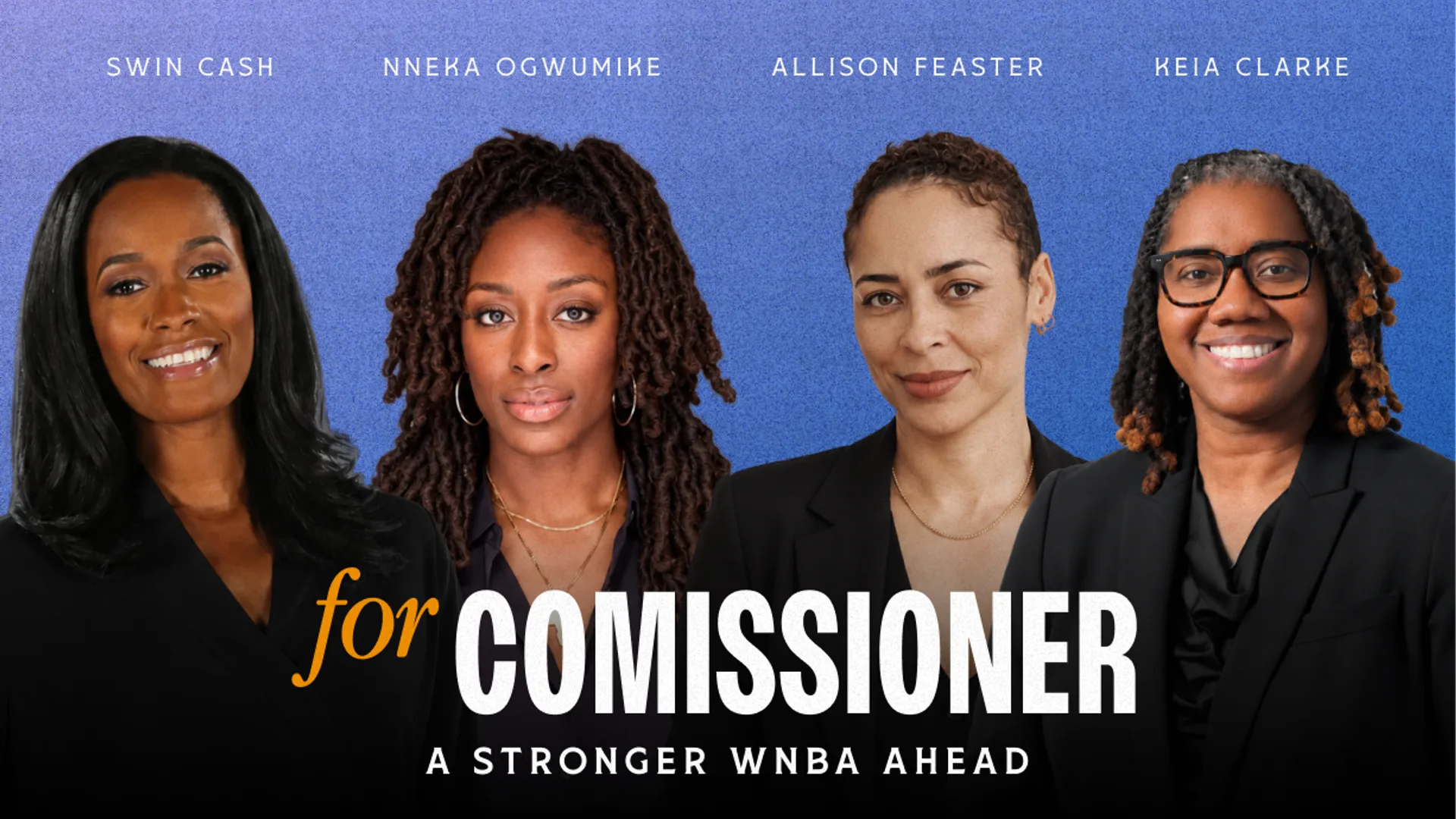
Here are four leaders who embody different pieces of that future.
Swin Cash: Cash understands professional basketball from nearly every angle. A Hall of Fame-caliber player, front-office executive with the New Orleans Pelicans, broadcaster, and board president of the Women's Sports Foundation, she combines basketball credibility with executive experience and has spent years helping shape the broader women's sports ecosystem.
Allison Feaster: After a successful WNBA career, Feaster earned her place in NBA basketball operations through the league's Basketball Operations Associate Program before rising to become Vice President of Team Operations and Organizational Growth with the Boston Celtics. A Harvard econ grad with deep experience in player development and organizational strategy, she brings both analytical rigor and executive credibility.
Nneka Ogwumike: Few people command more respect across the league than Ogwumike. She has been the WNBA Players Association president for a decade, is a Stanford graduate, WNBA champion, and longtime advocate for athletes, and she has demonstrated that she can build consensus, navigate complex negotiations, and lead well beyond the basketball court.
Keia Clarke: Clarke has quietly become one of the most accomplished business executives in professional sports. As CEO of the New York Liberty, she oversaw the transformation of one of the WNBA's flagship franchises into a championship organization and commercial powerhouse, pairing strategic vision with operational excellence.
None of these candidates would solve every challenge facing the league. But together they represent the qualities the WNBA should prioritize: credibility, strategic vision, business acumen, and an understanding that the league's greatest asset: the trust of the people who have built it.
The next commissioner will inherit a league unlike any in its history. That's why this search isn't simply about finding a capable executive. It's about deciding whether the WNBA is ready to govern itself with the confidence of a major professional sports league. The title "commissioner" should mean more than a change on a business card. It should signal that the league has reached a point where its leader has both the responsibility—and the authority—to chart its own future.
Women to know
Mia Hutchinson · Guard, UC Berkeley, Senior
Breanna Lewis · Center, Dallas Wings, Veteran
Samaria Williams · Broadcaster, ESPN Women's Basketball
Coach Victoria Martinez · Head Coach, Georgetown University
Thank you for being part of this journey with us. We're just getting started.
The Storied editors