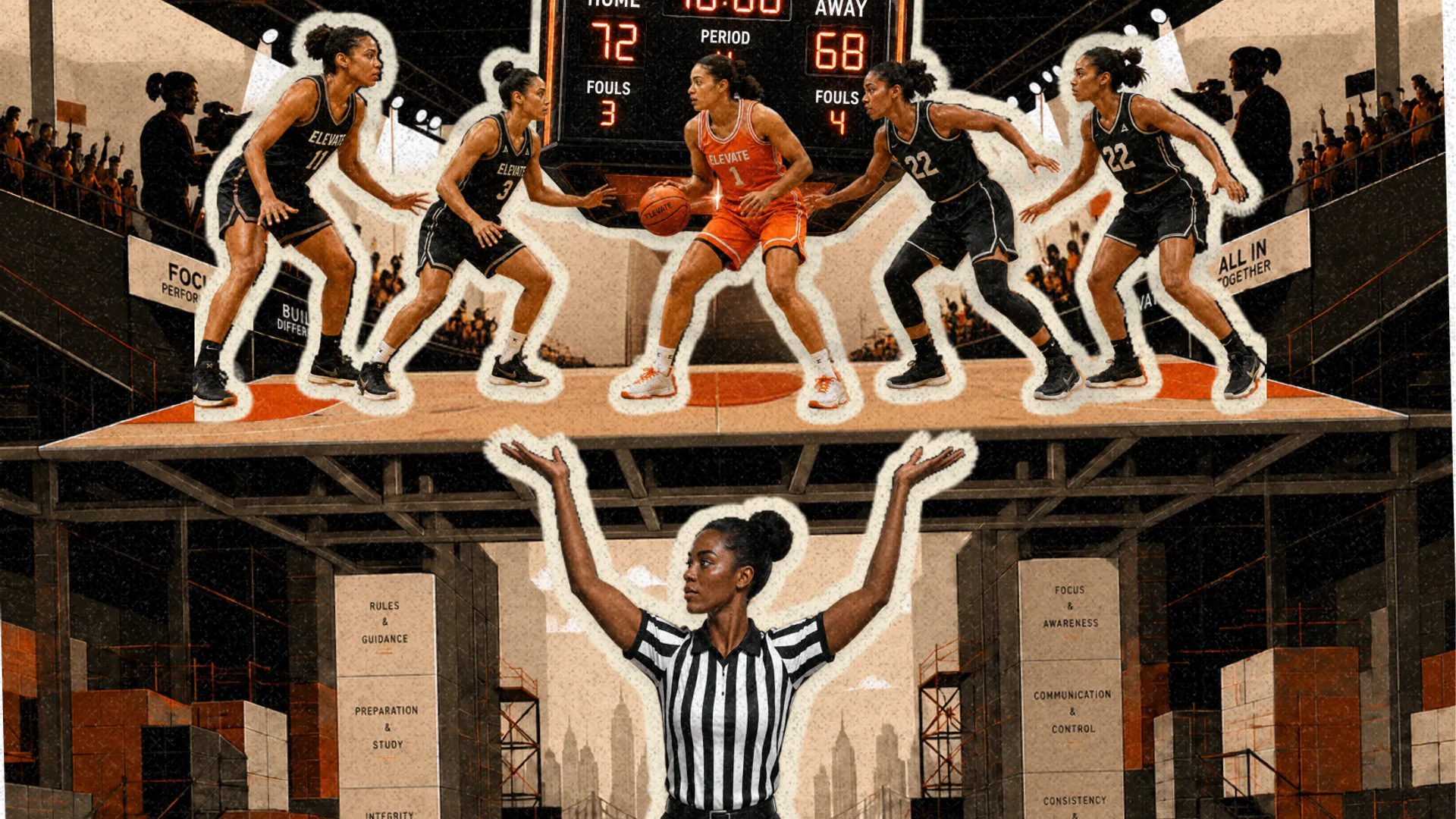

The conversation around the WNBA this past week is a reminder of something every league eventually confronts: officiating isn’t peripheral—it’s core to the business.
And it’s one of the hardest things to get right.
Last year, while producing a documentary for Hello Sunshine’s The Rise, I spent time looking closely at the league’s growth points, and officiating was already on the list. The WNBA has made efforts—notably forming an officiating task force—to address concerns around physicality and player protection. But it only takes one moment to push officiating back to the forefront of every WNBA conversation and this week’s Caitlin Clark–Alyssa Thomas scramble did exactly that.
At its most basic level, this is about trust and professionalism. Players need to believe the game is being called fairly and consistently. But the impact of officiating is felt beyond the bench - fans, sponsors, broadcast partners all have a stake in how the game is adjudicated. Other leagues have invested heavily in this reality. There’s a reason tennis relies on Hawk-Eye and the NBA built a centralized replay system. Precision and transparency aren’t luxuries—they’re infrastructure.
Right now, the WNBA is still building that infrastructure, but audiences are seeing the gaps in real time. This raises questions about experience of WNBA officials and how they are employed. The refs are unionized, covered by a collective bargaining agreement, and they carry the official "staff" title. But financially, they operate closer to part-time or contract workers and are paid $1500-$2500 per game. The League would argue the season’s footprint doesn’t support a full time work model, so in the off-season, refs often pick up jobs with the NCAA or the NBA’s G League - both of which operate under different rules.
This gap is one of the structural pieces that critics point to when arguing that the quality of WNBA officiating lags behind the NBA. Bottom line: the WNBA hasn't yet built - or funded - a system that can retain and develop referees the way a fully salaried staff would allow.
Players have been clear in voicing concerns for several years, and rightly so. This isn’t just a problem on the court - the consequences of the officiating follow players like Thomas out of the arena in the form of death threats.
The league is growing, and growth demands investment in the product. Officiating is part of that. Get it right, and it strengthens everything: player experience, competitive integrity, fan trust.
The WNBA is building something sustainable.
Now it has to officiate like it.