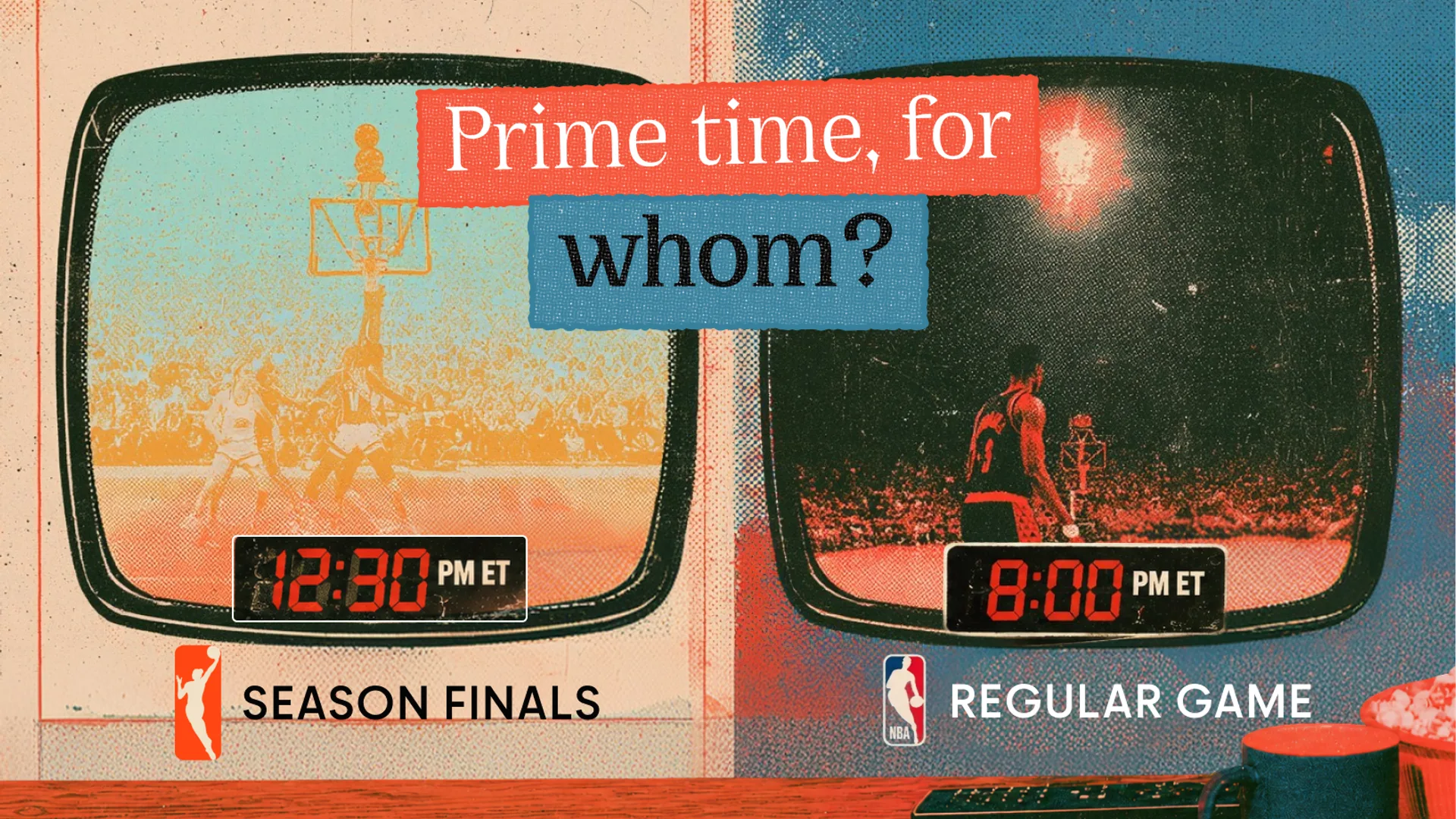

When we look at the scheduling debacle surrounding Game 6 of the WNBA Finals, we see something bigger than a logistical problem.
It’s a failure to plan for the success of women’s sports.
A game that could decide the WNBA championship will tip off at 12:30 p.m. ET.
The Atlanta Dream’s regular arena holds approximately 3,500 fans. State Farm Arena, home of the NBA’s Atlanta Hawks, holds around 17,000. Games 3 and 4 of the Finals moved there and sold out.
But the Hawks have a game Thursday night.
It’s tempting to think of the goodwill the Hawks could have generated by moving an early-season game entirely. To be fair, the Hawks have adjusted their schedule to accommodate the Dream, including moving Thursday’s game back an hour. The bigger question is why the WNBA was left trying to solve this problem during the Finals at all.
Because preserving that NBA game in its Thursday night window could cost the WNBA millions.
A weekday afternoon Finals game is less valuable than the prime-time game that was originally scheduled. Fewer fans can attend. West Coast viewers — and the Valkyries are a West Coast team — are being asked to watch at 9:30 in the morning. Sponsors bought into a Finals that presumably offered a marquee national stage. The commercials, in-game signage, ticket sales and ratings all have value attached to when people can actually watch.
And then there is the signal it sends to future investors. If you’re considering spending millions to associate your brand with the WNBA Finals, you need to know the league can deliver its biggest games in windows worthy of the product.
When the biggest game of the season can air at a moment when people are getting ready for lunch or commuting to work, it is a less valuable property.
A potential championship-clinching game should never have been left vulnerable to this conflict in the first place.
Why wasn't this addressed when the Dream started to raise the alarm? Where were the contingency plans? Who made this decision? Where is WNBA leadership yet again?
Women’s sports, as is typically the case, are expected to accommodate a system that hasn't kept pace with its success.
NBC and Peacock just announced that Game 4 was the most-watched Game 4 in WNBA Finals history. Playing Game 6 outside a smart, prime-time window is like welding a rocket ship to the platform at liftoff.
Fans, sponsors and the WNBA itself are all getting burned.