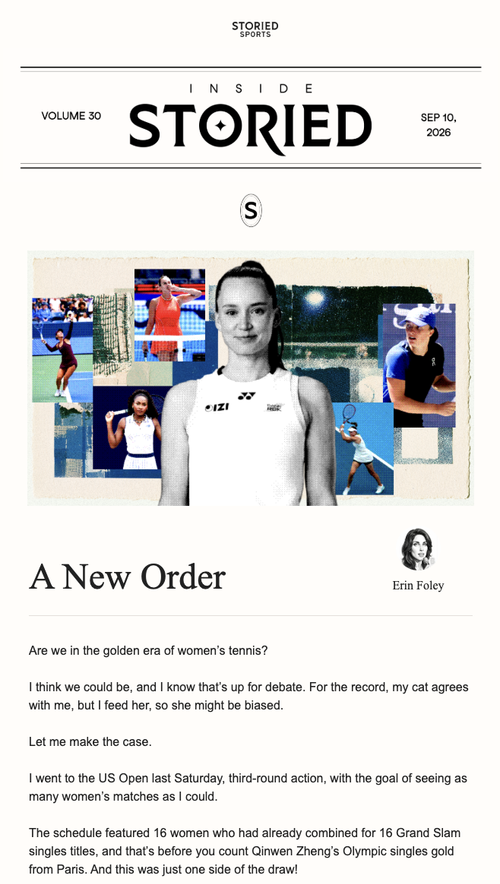
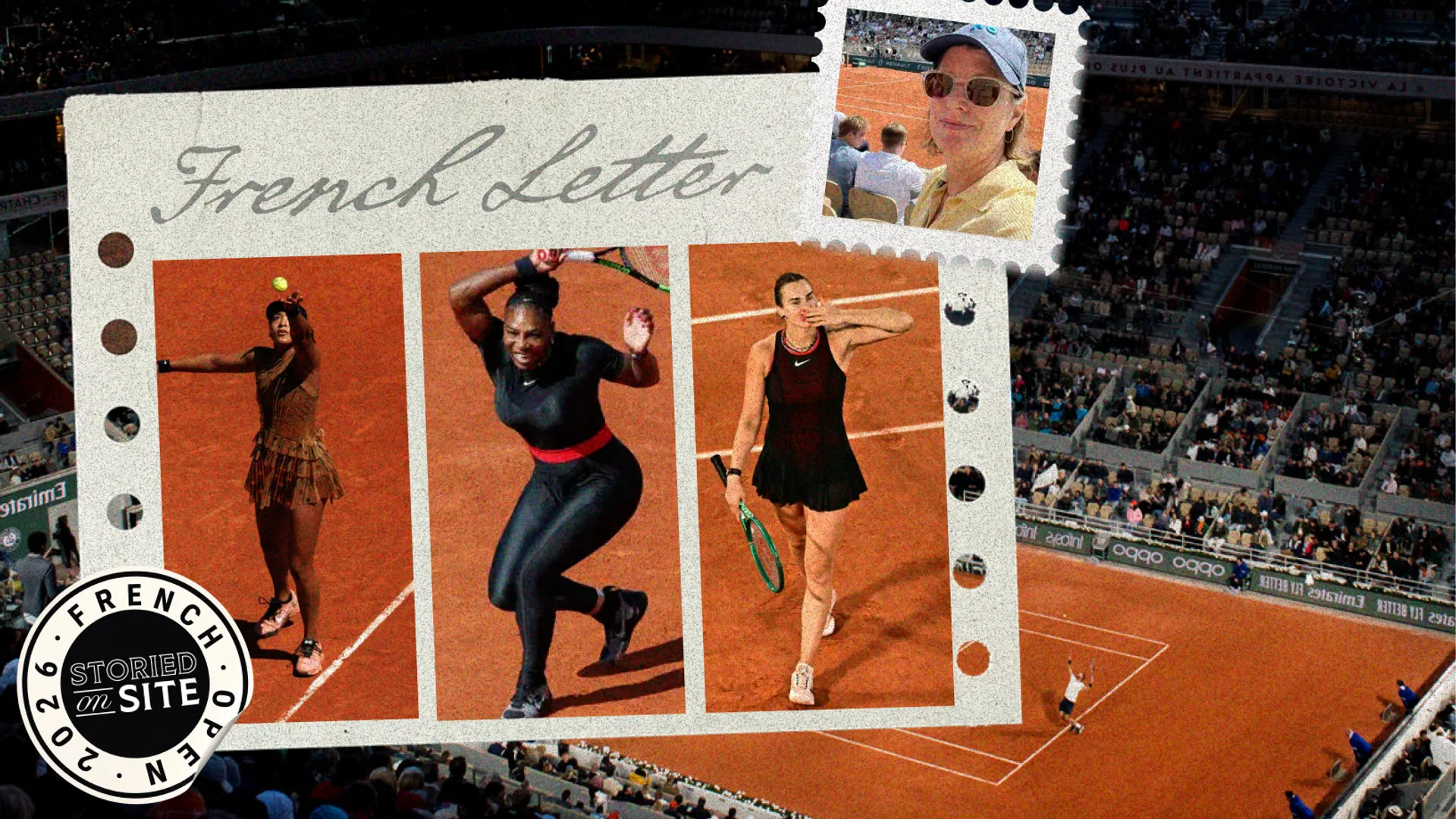

There are certain traditions baked into the red clay at the French Open. On Tuesday, one of those was broken when Aryna Sabalenka beat Naomi Osaka in the main arena Philippe Chatrier in the night match.
The night match, since there is only one.
Playing in it is an honor women rarely get at Roland Garros. Of the prior 60 night matches for the coveted television window, all but five had been men’s. Former player Amelie Mauresmo is the tournament director, and has twisted herself into a verbal pretzels trying to justify the choice.
You can’t walk 10 steps down a central Paris street without tripping over some artistic love note to the female form, but real women on Chatrier? Not as “attractive” a match according to Mauresmo.
How I loved her swooping backhand. But talk about being co-opted.
In a tournament where the first week’s heat felled top seeds and big names in both tournaments, and before Sabalenka ultimately lost to No. 25 Diana Schnaider, news broke that another French favorite was coming back.
Serena Williams.
At 44, could such a thing be possible?
No one knows, because athletes on the women side have been rigidly restricted based on the social requirements of motherhood and aging. The only thing less “attractive” than a woman on Chatrier in prime time would be an middle-aged woman.
If Serena could chart a new path in this regard, she will have done more for women’s sports than we possibly deserve. She’s been redefining what is possible for 30 years. Maybe being a spokesperson for a GLP-1 isn’t as exciting as taking out contenders half her age at a Grand Slam.
And when it comes to platforming women’s sports, the French could really use some new traditions.