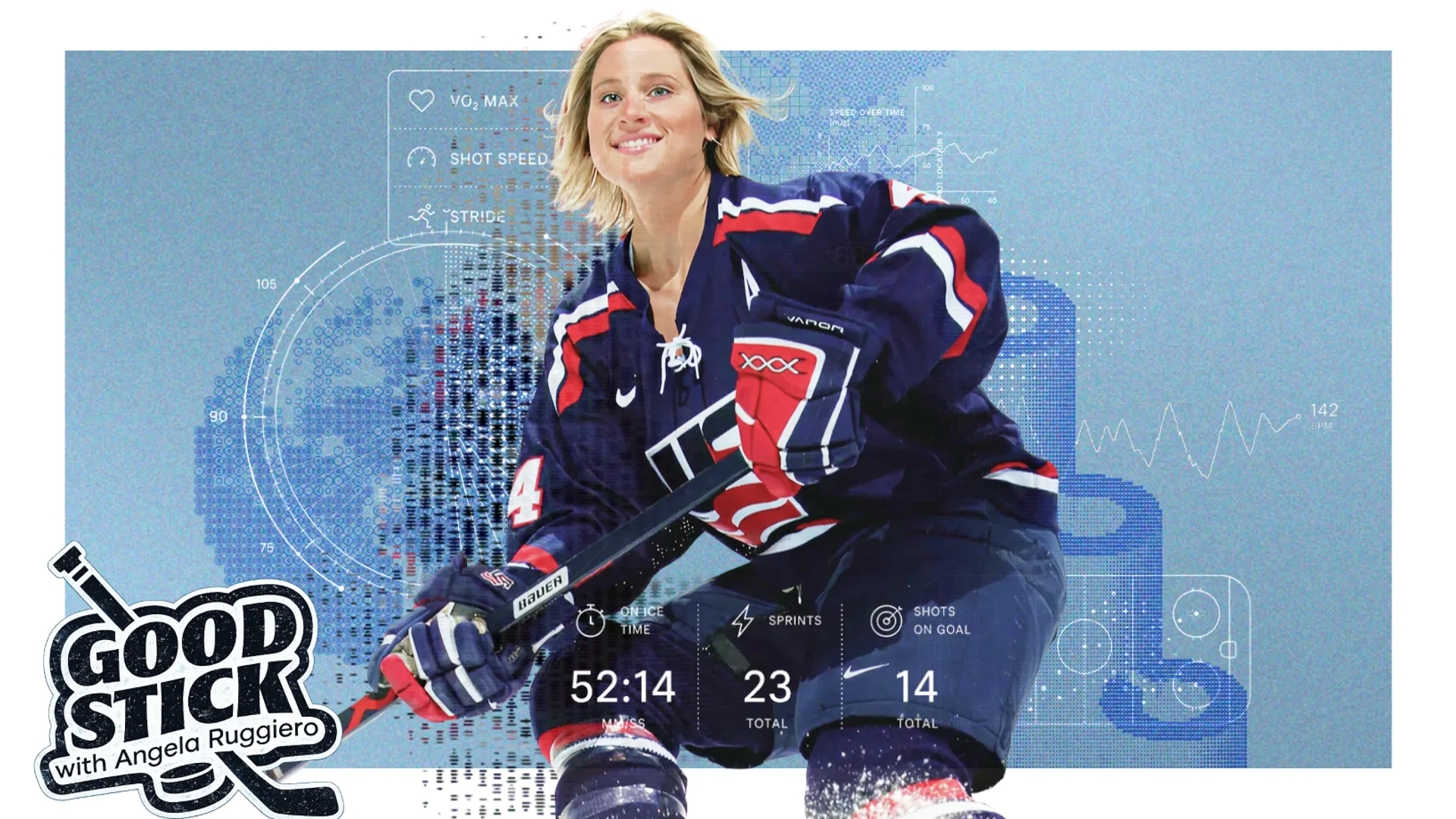

My body is my business.
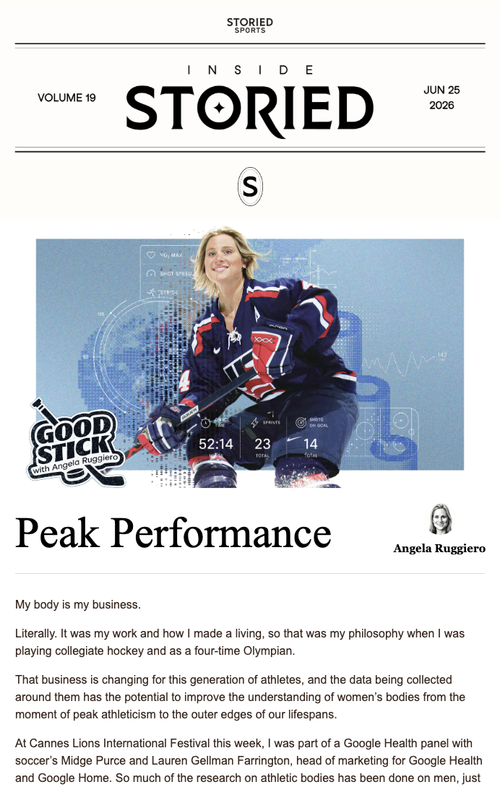
Literally. It was my work and how I made a living, so that was my philosophy when I was playing collegiate hockey and as a four-time Olympian.
That business is changing for this generation of athletes, and the data being collected around them has the potential to improve the understanding of women’s bodies from the moment of peak athleticism to the outer edges of our lifespans.
At Cannes Lions International Festival this week, I was part of a Google Health panel with soccer’s Midge Purce and Lauren Gellman Farrington, head of marketing for Google Health and Google Home. So much of the research on athletic bodies has been done on men, just like in medicine in general.
So here’s the truth: Do we even know what women’s bodies are capable of?
Serena Williams is coming back to compete at 44, and Rachel Entrekin just wonthe grueling Cocadona 250 ultramarathon in the Arizona desert. She set a new course record and won the race outright, meaning she beat all the men in the field.
Sports are allowing us to understand what is physically possible — they’re a proving ground for human optimization.
There are wearables now to track athlete metabolics, and athletes in women’s sports are able to know more about their personal physiology than ever before. And with that knowledge we can recover faster, play longer, and live healthier lives.
If I’d had more insight into my body, my business, what else might have been possible? But I can still understand more now as that data comes in, and so can women at every age. This data is for all of us.
I’m sure a lot of you read Melinda Gates French’s opinion piece in the New York Times about the lack of medical attention to menopause. It’s all stemming from the same problem. A World Economic Forum paper reported that just 6% of private healthcare capital is spent on women.
We need the data around our bodies so we can stay healthier longer. Getting metrics, quantifying interest and understanding the systems around women’s sports has been the focus of my life after playing Olympic hockey. With health, the data will extend competitive careers and livelihoods.
It’s about time.