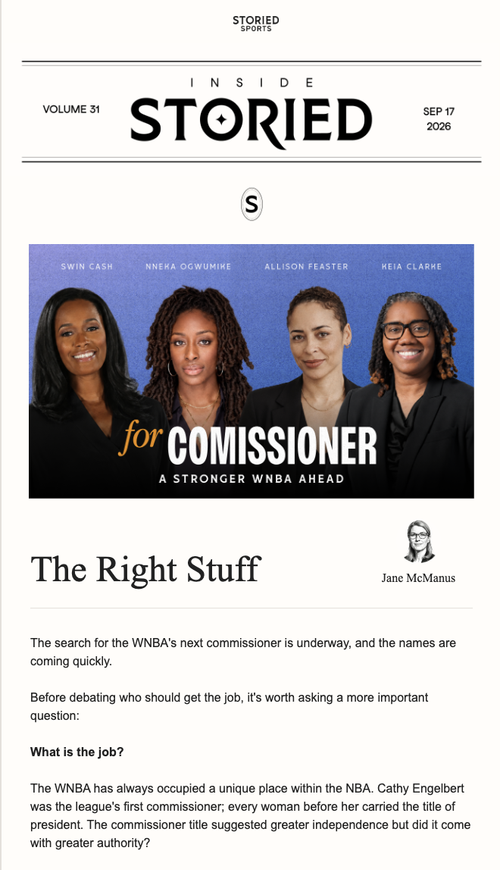
The WNBA is at a crucial moment.
We have the players. We have the fans. We have new owners coming in who understand the opportunity. We have expansion. We have more attention on women’s basketball than at any point in my lifetime.
Now we need the right commissioner.
And that person has to understand something: This is not the time to think small.
First, you have to be a businessperson — and this is what Cathy Engelbert gotright. Grow the media rights. Grow corporate sponsorships. Grow ticket sales, merchandising and licensing. Find new revenue streams.
Popularity is great. But popularity has to become sustainable profitability.
Second, you have to rebuild the relationship with the players.
I would go to every team. Sit down with every player and listen. There is no league without the players. They are your greatest asset. Compensation matters. Benefits matter. Working conditions matter. Giving players the ability to build their own brands matters.
Trust matters.
You have to be firm when you need to be firm. But you have to be fair. And the players have to believe that you respect them.
Third, invest in infrastructure.
We still have too many haves and have-nots in this league. Some playerswalk into first-class practice facilities with everything they need.Other teams are still trying to figure out where they are going to play.
That can't be the standard anymore.
Practice facilities. Arenas. Travel. Medical care. Recovery. Sports science. Player development. Those things aren't luxuries. They're the cost of doing business in a major professional sports league.
Raise the bar for everybody.
Next up is marketing. We have stars. Connect the fans to these women beyond game day. Expand the digital content. Expand streaming. Build the international audience. Give people a reason to follow the WNBA year-round.
Look at the NFL. The season ends, but the NFL never disappears. There is the combine. The draft. Free agency. Minicamp. Training camp. They have turned the entire calendar into a story.
That's not an accident. That's strategy.
Women's basketball has competition for attention now, too. There are newleagues and new opportunities for players. The WNBA can't assume thatbecause it has been here the longest, everybody will automatically cometo it.
You have to compete. You have to recruit. You have to innovate.
I've been in every seat. I've been a player. I've been a coach. I've been ageneral manager. I've run companies. One thing I've learned is thatleadership isn't telling everybody what you already did.
Leadership is telling people where you're going, how you're going to get there and what you're willing to invest to make it happen.
The WNBA has spent 30 years getting to this moment.
There’s no time to waste.