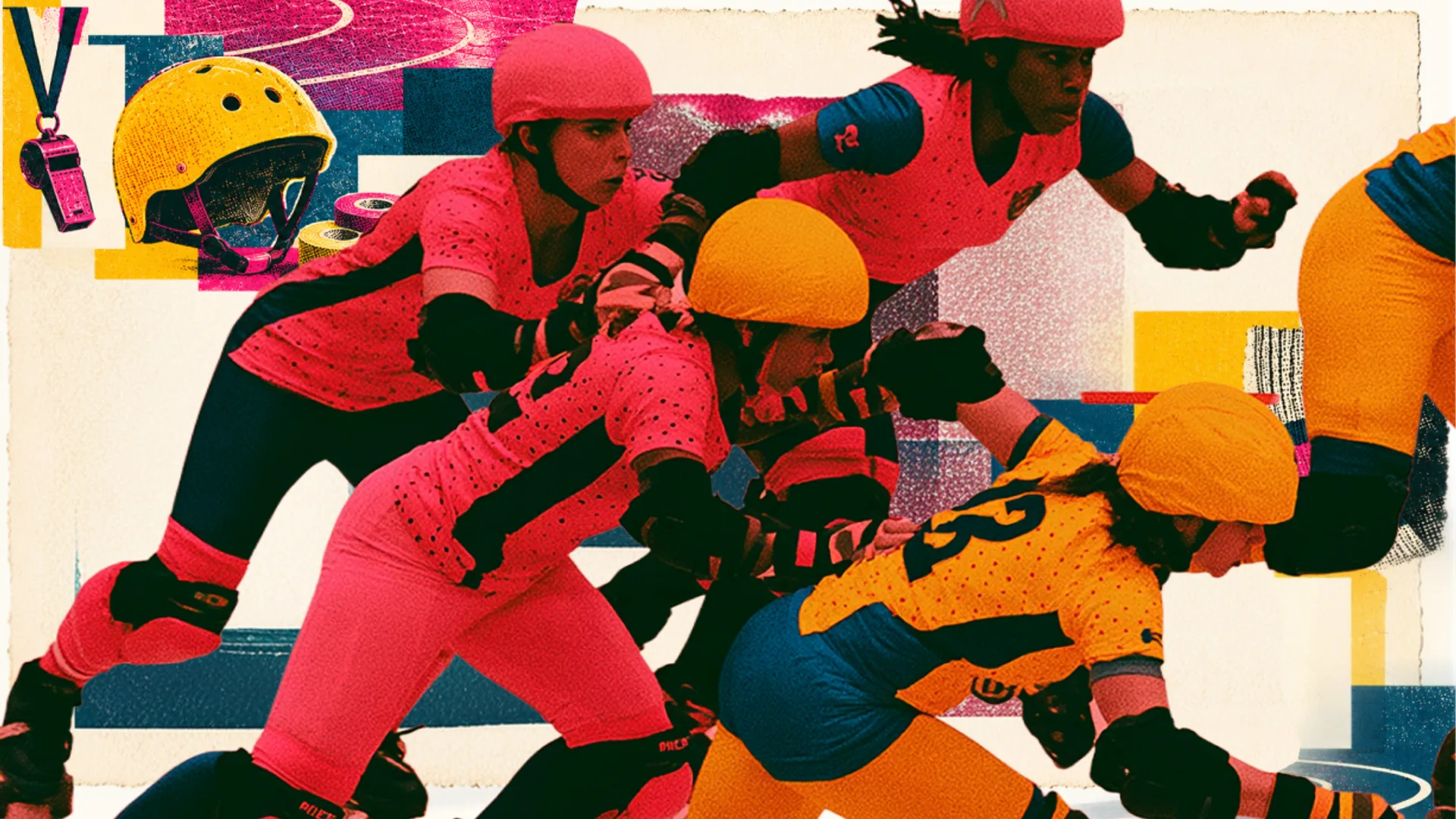

In 2007 I started playing roller derby in Yonkers, N.Y., under the nom de guerre Lesley E. Visserate. The Women’s Flat Track Derby Association is the governing body of the full-contact sport, but it is a grassroots organization, and skaters debate decisions and policies before voting.
In 2010 we voted to include transgender skaters.
This was not taken lightly, but was the natural conclusion of a sport with an informal motto, “roller derby is for anyone who wants it.”
Last week the Long Island Roller Rebels won an important case to preserve that choice. As a former player, it was pretty awesome to see league president “Curly Fry” quoted in an official ACLU press release.
“Amid relentless attacks on transgender people, today the court delivered a resounding win for trans people in New York. The Roller Rebels want trans women to know that they are welcome to join our league, and trans people belong in Nassau County,” they said.
The case started in 2024, when Nassau County Executive Bruce Blakeman issued an executive order barring transgender women and girls from competing in women’s and girls’ sports at county-run facilities. A judge struck down that order, finding Blakeman didn't have the authority to impose it. The Nassau County Legislature then passed a local law that accomplished essentially the same thing: women’s and girls’ teams that included transgender athletes could not use county athletic facilities.
That put the Roller Rebels in a vise. Their own governing rules allowed transgender women to compete, but following those rules could keep the league out of public facilities in its own county. So the Roller Rebels, represented by the New York Civil Liberties Union, sued.
A lower court upheld the county law, but last week a four-judge state appeals panel unanimously reversed that decision. The judges didn't decide who should or shouldn't compete in women’s sports. Instead, they ruled that Nassau County could not restrict access to public accommodations based on gender identity. The county law conflicted with New York’s Human Rights Law and Civil Rights Law and was therefore invalid.
Tl;dr Nassau County tried to make the eligibility decision for the Roller Rebels. The court said it couldn't.
I’ve watched the debate about inclusion in sports with disappointment. It’s true, LeBron James would definitely dominate a girls’ high school game. But he would also dominate a boys game. Players are divided by different levels, like age categories, and when people of similar skill sets compete, that’s a level playing field. It’s why the NBA, NCAA men’s basketball and WNBA can both all be compelling basketball. It’s why Enes Kanter’s stunt was meant to hurt women who believe in inclusion, and in that he had an ally in Nassau County lawmakers.
Decisions about who fits in a sport or a competition are best left to those governing bodies, and roller derby has found a way to make the category as expansive as possible.
There is no universal rule that can apply to every sport because sports aren't all the same. Wrestling isn't swimming. Swimming isn't basketball. And none of them are roller derby. The people who know those differences best are the people responsible for governing their sports.
Too often, the discussion about trans athletes assumes that leagues will want to exclude them, that they make competition unfair — especially in a physical sport. But I can say as someone who skated with and against trans women, that was not my experience.
Roller derby made its choice 16 years ago and last week, four judges affirmed one league’s right to keep making it.