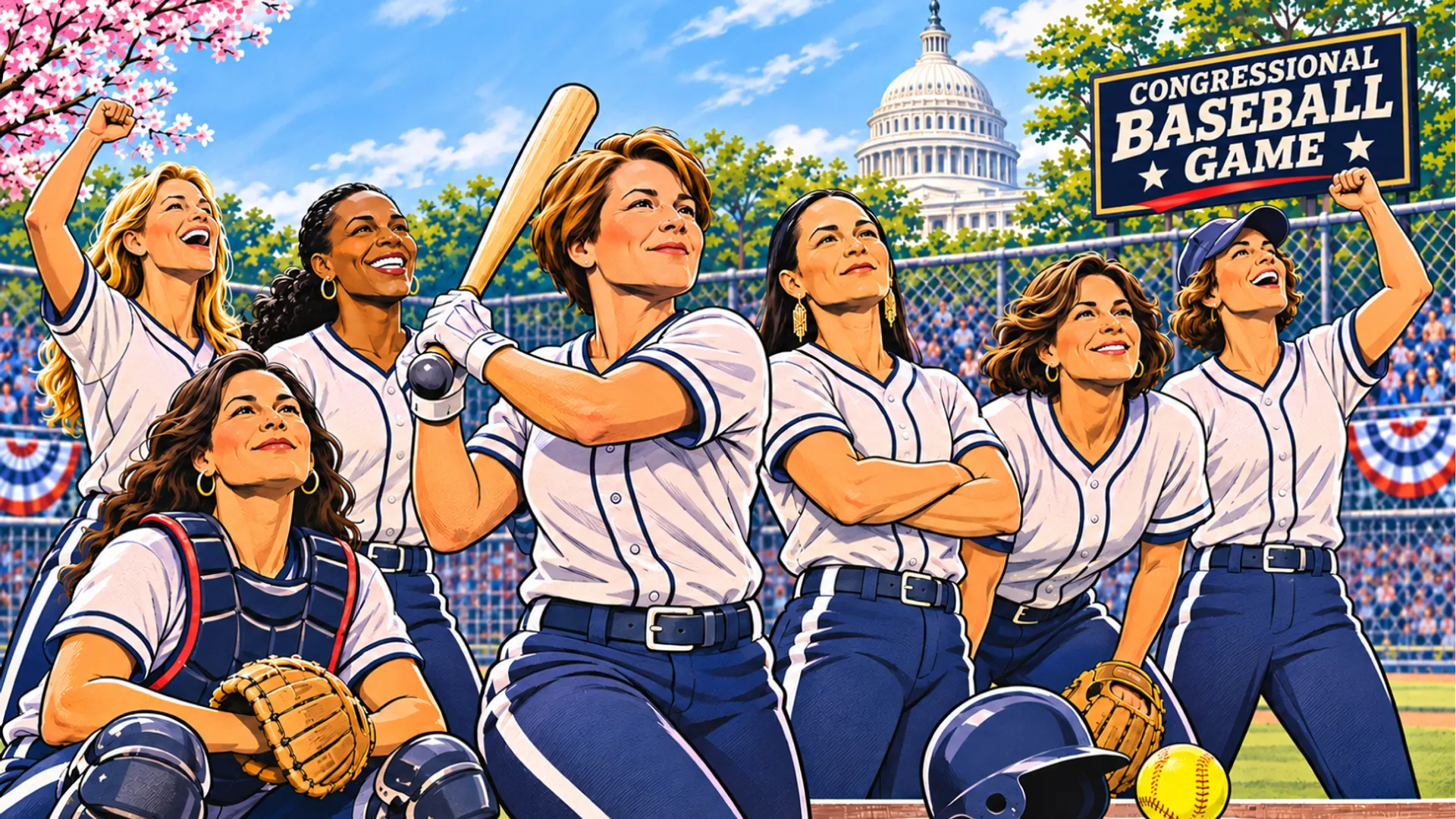

Fifty-four years after Title IX opened doors for girls to compete, the girls who walked through them are taking political power.
The blue tsunami (Blunami?) last week catapulted American women into office in record numbers. Although not all of the races have been decided, more women will serve as governors and in the House of Representatives than ever before.
And look at how many of them played sports.
Stefany Shaheen will represent New Hampshire when newly elected members are sworn in. Shaheen, 52, played Division I volleyball at Fairfield and later coached the team at her high school. In 2023, President Joe Biden named her to the President’s Council on Sports, Fitness and Nutrition.
Is it an accident that 54 years after the passage of Title IX, so many women winning these races played sports in high school, college and beyond? It was more than a decade ago that EY and espnW championed ****research that found 94% of women in the C-suite had played sports, and 52% had competed at the university level.
Now we can see that leadership pipeline reaching government.
Maura Healey, 55, might be the poster child. The Massachusetts governor was the point guard and captain of the Harvard basketball team and later played professionally in Austria. But she is hardly the only one. Massachusetts Rep. Lori Trahan, 54, is in the Lowell High School Athletic Hall of Fame after a basketball and volleyball career that took her to Georgetown, where she played Division I volleyball on scholarship.
But it’s not just high-level competition in conventional sports. Take Sharice Davids, 46, a representative from Kansas who competed in mixed martial arts while getting her law degree from Cornell. She had a 5-1 record as an amateur fighter before pursuing another competitive calling in Congress.
Juliana Stratton, 61, will become the second Black woman to represent Illinois in the Senate this January after winning the seat held by Dick Durbin. But that wasn’t her first race. Stratton took up endurance sports after turning 40 and has completed five marathons and seven triathlons.
And this is one thing that crosses party lines. New Hampshire Gov. Kelly Ayotte was a competitive skier in high school and competed with Penn State’s club ski team.
That experience matters because these women aren't just winning elections. They are now in positions to make policy.
There are any number of issues that women who have played sports — and who have raised daughters in sports — might see through a different lens. Title IX enforcement. College athlete compensation and legislation such as the Protect College Sports Act. The rising cost of youth sports. Athlete health and safety. Bodily autonomy. Equity for college and professional athletes. The future of “non-revenue” and Olympic sports. Shaheen’s appointment to the President’s Council is one example of how athletic experience and policymaking can intersect.
For decades, organizations like the Women’s Sports Foundation have researched what sports participation can do for girls: building confidence, leadership and resilience, and opening educational and professional opportunities.
Title IX gave millions of girls a chance to play. Now some of those girls are governors, senators and members of Congress.
For the first time, we get to find out what they can do with the power.